


 Bullfighters
The history of the San Fermín running of the bulls: a centuries-old tradition that defines Pamplona
 03/11/2026
The History of the San Fermín Running of the Bulls: A Centuries-Old Tradition Defining Pamplona
Pamplona, Navarre. The San Fermín running of the bulls (*encierro*) is one of Pamplona’s most iconic traditions and a bull-related event with significant international renown. Its history dates back to the Middle Ages, when the movement of bulls from the outskirts of the city to the venues where bullfights were held gave rise to a custom that, over the centuries, would become a symbol of the San Fermín festival.
The Origins of the Pamplona Running of the Bulls
The roots of the *encierro* can be traced to the 14th century. At that time, bulls were herded by drovers to the arena where they were to be fought. These transfers—historically known as *entradas* (entries)—began to attract local residents and young people, who gradually started joining the procession along the route.
Over time, running in front of the bulls evolved from a spontaneous practice linked to the transport of livestock into one of the most distinctive features of the Pamplona festivities.
From Livestock Transport to a Popular Tradition
In the centuries that followed, the participation of the *mozos* (young men/participants) became more established, while municipal authorities introduced regulations to organize the run. In 1867, official rules governing the *encierro* were published, and on June 28, 1876, the Pamplona City Council formally incorporated the event into the festival program.
The evolution of the *encierro* was also tied to changes in the location of the city’s bullrings, which altered the route at various points throughout its history.
A Historic Route Through the Streets of Pamplona
The inauguration of the current bullring in 1922 established the route that—with minor adjustments—defines the *encierro* as we know it today. The route begins at the Santo Domingo corrals and continues along the street of the same name, through the Plaza Consistorial, and along Mercaderes and Estafeta streets, before reaching the Telefónica section and ending at the bullring.
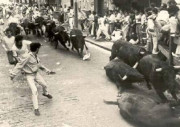
In total, the course measures approximately 850 meters. Each morning, from July 7th to 14th, at eight o'clock sharp, six fighting bulls—accompanied by steers—run through the streets of the old town in a race that typically lasts only a few minutes.
The *encierro* (running of the bulls): an international symbol of San Fermín
The international profile of the San Fermín festival grew significantly during the 20th century. The promotion of the festivities, combined with the work of American writer Ernest Hemingway, helped introduce Pamplona and its *encierros* to audiences around the world.
Today, the *encierro* represents much more than just a race; it is a historic tradition deeply intertwined with Pamplona’s identity, its bullfighting culture, and the San Fermín celebration itself.
The excitement of the runners, the sound of the rockets, the anticipation of the spectators, and the unique character of the streets make each July morning one of the most recognizable events on the Spanish festive calendar.
Thus, the San Fermín *encierro* continues its journey through the centuries, keeping alive a tradition that remains an integral part of the history and collective memory of Pamplona.
Enviar comentarios